Thank you for applying to join the next cohort of Nervous System Mastery — we’re excited to share more details with you.
Our next cohort runs Oct 5th - Nov 6th 2026
We run two cohorts per year, the last two have sold out, and we received over 4000 applications in the past year.
You can either press the button below to pay and secure your seat, or keep reading for more details about the experience (which we strongly encourage so that you know what you’re signing up for!)
There are two pricing options:
ESSENTIAL: Single cohort pass to our upcoming flagship five-week live cohort. The investment is 4x monthly payments of $375.
- Lifetime access to curriculum materials & alumni community
- Lifetime access to masterclass vault (30+ hours of content)
- 3-month subscription to the Stateshift App
- 1 x physical deck of Calm Cards
- Join weekly live sessions during cohort (single cohort)
- Join weekly guest masterclass during cohort (single cohort)
- Practice in weekly relational ‘dojo’ sessions (single cohort)
- Personalised support and Q&A access from Jonny (single cohort)
LIFETIME: Get lifetime access to all future cohorts, twice per year. The investment is 4x monthly payments of $550.
- Lifetime access to curriculum materials & alumni community
- Lifetime access to the masterclass vault (30+ hours of content)
- 3-month subscription to the Stateshift App
- Receive a physical deck of Calm Cards
- Join weekly live sessions (all future cohorts)
- Join weekly live guest masterclass (all future cohorts)
- Practice in weekly relational ‘dojo’ sessions (all future cohorts)
- Personalized support and Q&A access from Jonny (all future cohorts)
- PLUS: Lifetime access to future live cohorts ~ running 2x per year
Live Cohort
Nervous System Mastery is delivered as a live-cohort experience online over 5 weeks, which means part of the learning is material to consume in your own time, and the other is live sessions with the community.
In this 5-week experience, you’ll learn through a mix of:
- Pre-recorded audio theory (45–60 min/week) in your own time
- Guided workbook prompts & reflections
- Live sessions with Jonny – Fridays @ 10am PT
- Guest Masterclasses – 90 mins weekly (optional)
- Relational Dojo small group practice pods – guided by trained facilitators

“Nervous System Mastery felt like discovering the missing piece of the puzzle. I remember thinking ‘this is ridiculously effective’”
– Philip F, Design & Behaviour Change Consultant.
Your Schedule
The 5-week cohort takes place between Oct 5th - Nov 6th 2026 and includes:
- Live Kick-off w/ Jonny ~ Oct 5th @ 10am PT
- Course + Community Orientation w/ Ocean ~ Oct 7th @ 10am PT
- Weekly Live Sessions w/ Jonny ~ Fridays @ 10am PT (from Oct 9th)
- Weekly Guest Masterclass sessions ~ 90 mins on Wednesdays
- Guest speakers are being confirmed
- Weekly Relational Dojo ~ small group practice pods ~ multiple time options (more info during onboarding week)
- Follow-up & Integration Call ~ Dec 4th @ 10am PT
Convert to your timezone here. All sessions are recorded if you can’t join live.


Your Commitment
This is an inward-facing, experiential journey — the more you bring to it, the more transformation becomes possible.
By joining, you’re committing to:
- Practicing self-awareness and curiosity
- Showing up for live sessions when possible
- Experimenting with protocols in your daily life
- Engaging with a community of like-hearted learners
We’ve seen again and again: students who lean into both the learning and the live practice consistently experience deeper change.
You’ll be invited to look inward, stay with what’s alive in the moment, and meet yourself with presence; which can sometimes be confronting. That’s why we begin with tools that help you regulate and ground, before exploring more activating or emotionally charged material (only as far as feels right for you).
Time commitment.
We recommend setting aside 4-5 hours per week if you want to do a deep dive – core curriculum, Friday live sessions, the weekly Guest Masterclass, and weekly Relational Dojos.
If your time is limited and you’d like to focus on the core sessions, you’ll need just 1-2 hours per week – for the core curriculum and Friday live sessions.
Our commitment.
One of our core philosophies is self-unfoldment, and we take an approach of helping you remember what your body already knows: how to come home to yourself, as opposed to thinking that some part of you is broken or needs fixing.
We’ll offer research-based tools, nourishing community, good humour, and a space that honours both your soul and desire for knowledge. You bring your curiosity and we meet you there.

"Nervous System Mastery opened a door to a space that I barely knew existed. And now that I do, my life is the better for it. This program is going to positively impact me for years to come.”
- Brian Portnoy, Founder of Shaping Wealth and author of ‘The Geometry of Wealth’
The NSM Curriculum

The theory + protocols included in this training draw on quality research from peer-reviewed studies and have been distilled for ease of learning.
Click on the ▸ button ▸ to expand each section below:
WEEK 1Nervous System Fundamentals
What is Nervous System Mastery: an invitation to see your world and your relationships through an entirely new lens.
The ‘R-ISE’ Framework: the ‘R.I.S.E. out of Reactivity’ core framework underpinning your journey towards nervous system mastery.
Three Nervous System Operating Modes: seeing your world through the lens of polyvagal theory.
Future Self Journal Prompt: a powerful journaling prompt to seek wisdom from your old self, get clear on your intentions and give yourself full permission to invest time into this exploration. Write this using Futureme.org
Revving the Engine // Experience + feel the difference in your body in the full spectrum of the nervous system.
WEEK 2Interoception vs. Reactivity
Deconstructing Interoception: five ways to ‘taste your own inner landscape’ with somatic listening practices.
Two Types of Reactivity: understanding what happens when our fight/flight response takes over and we fall into limbic hijack.
Somatic Freediving: exploring an experience in your life that brings you inside your body.
What is Your Reactivity Costing You? // radical self-enquiry on how decisions made from reactivity are negatively impacting your life.
Guided A.P.E. Protocol // daily interoceptive practice for the first thirty breaths of your day after waking.
Somatic Mapping: using a body-scan to track, sense + feel signs of reactivity, fear + stress in the body.
WEEK 3Shift Your State
Self-Regulation Strategies: exploring our tendencies for up + down-regulation of our nervous systems.
Three Ways to Shift Your State: learning the three ways in which humans shift their state: top-down, bottom-up & outside-in.
How Your Breathe = How You Live: exploring how our breath shapes our endocrine system and our autonomic arousal levels.
Self-Regulation Enquiry: exploring pattens + tendencies towards unhealthy or unconscious habitual self-regulation.
Pre-empting Reactivity: in situations with high emotional charge, use the Three C’s to recognise ‘dorsal shutdown’ to cultivate greater agency amidst challenging situations.
SOS Button: Grounding intensity using ‘5-4-3-2-1’, posture shifts + the 'Physiological Sigh'
How to Human Manual: Ten Bottom-up Protocols for Self-Regulation to take with you in every-day life.
WEEK 4Master Your Emotions
Emotional Neuroscience 101: exploring the distinction between emotions vs. sensations and what we can learn from recent literature.
Exploring ‘Emotional Debt’: the consequences of building up too much ‘Allostatic load’ that causes nervous system fragility.
Un-kinking the Emotional Hosepipe: exploring so-called ‘negative emotions’ and the value in expanding our emotional literacy.
What gets in the way? // choose an emotion to work with for the week and ask what gets in the way of inviting this sensation in?
Somatic Surfing: self-guiding through expressing or feeling into stuck emotion
WEEK 5Environment Redesign
The Flow of Your Day: Three things to implement every morning and evening to support nervous system flourishing
Sensory + Environmental Audit: setting up your home + work environment to be conducive for nervous system flourishing.
Redesign One Space: change one space in your home to be more aligned with your desired state.
Support Structures: recruiting friends, family and mentors to support your learning.
VAULTBonus Content
Bookshelf: curated reading + literature for those wishing to dive deeper and broaden their knowledge
Glossary: defining useful terms often used in the neuroscience literature
Biological mechanisms: disproportionate benefits of building CO2 tolerance with walking breath holds and nose-breathing.
Nutrition: recommended supplements & time-restricted feeding windows for enhanced energy.
Windows of Tolerance: Understanding principles of hermetic stress, titration, diaphragm mobility & expanding our capacity.
Student FAQ: recordings of all Q&As to date
Protocol Vault: research-supported protocols to support the core material
Deep Dive Interviews with Experts: Interview Series: a growing archive of conversations with neuroscientists, breathwork practitioners
PLUS Weekly Expert Q&A Sessions // Previous guest speakers include a hot-seat coaching session with sought after executive coach Joe Hudson, Bodywork specialist Eddie Ulm, Neuroscientist & breathwork researcher Satori Clarke, Somatic Coach Conni Biesalski, and Clinical Psychologist Nick Wignall, PhD.
Watch this video for a primer on what you can expect to learn…

NSM Learning Philosophy
1. Knowledge is a rumour until it lives in the muscle
Passively consuming dense content is borderline useless. Put another way by Derek Sivers: ‘if more information were the answer we’d all be billionaires with six-pack abs’. The benefits arise from consistent repetition—based on neuroplasticity... which require reps to build new neural pathways.
2. Be a scientist of your own experience
We all have different bodies and different nervous systems and differing commitments — there is no one-size fits all approach. As such the outcome is to equip you with the tools to experiment with the protocols to determine what is best for your unique needs.
3. Learning is optimal when embedded within community
Genuine learning rarely happens in a vacuum but ought to be subject to cycles of feedback. There is strong scientific support for the benefits of having students learning and working in groups¹.
Even when we know the right things to do—learning together, sharing wins, insights and feedback has been shown to accelerate the learning process. We’ll be using Circle as our all-in-one community platform where you’ll meet and connect with a wide-variety of mentors, alumni and Nervous-System-Curious humans.
4. You learn best by teaching others
Leveraging the Feynman technique, in the final week, you will be invited to share what you've learned with a colleague or friend — this will help to identify gaps in your explanation and re-enforce learnings for yourself (as well as hopefully helping them out).
¹‘Group work as an incentive for learning – students experiences of group work’ by Eva Hammar Chiriac, 2014 (link)
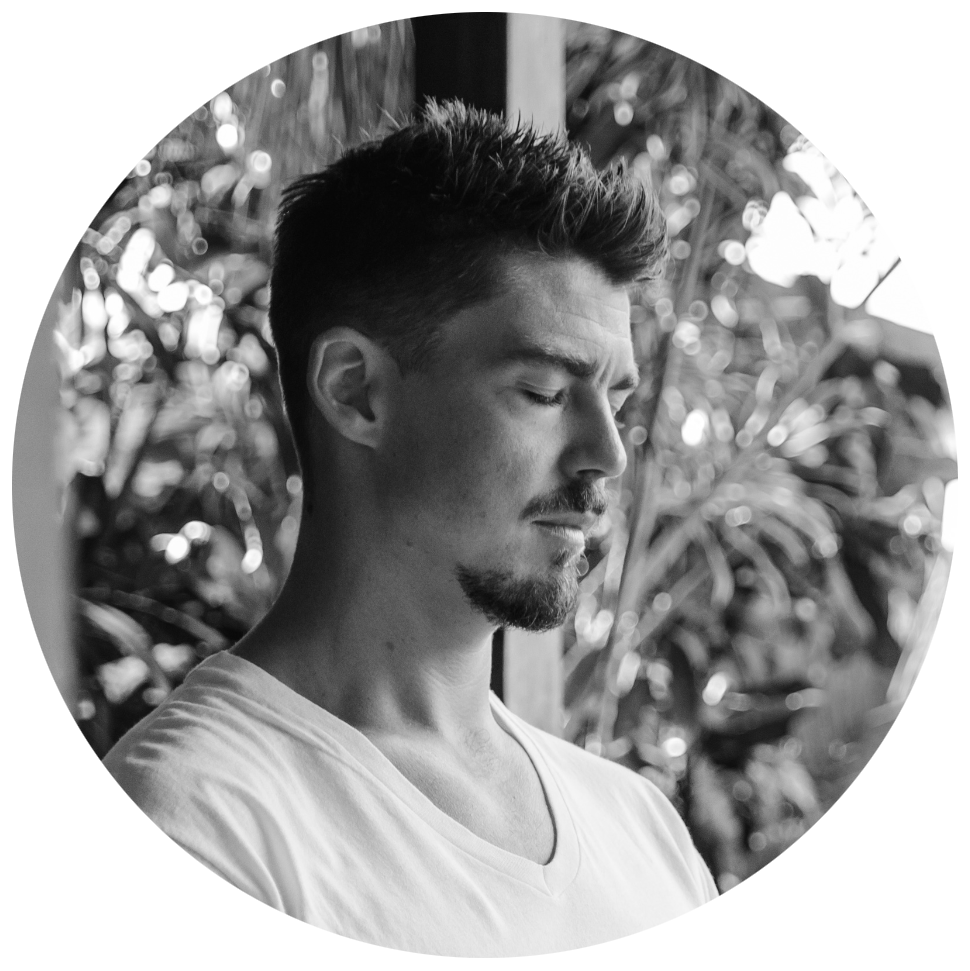
"The state of your nervous system in each moment is a force multiplier for reaching your greatest potential.”
— Jonny Miller, NSM founder
Preparing for the Cohort
Once you enroll for NSM, we’ll share all the onboarding next steps with you. In short, there’s nothing you need to do to prepare for NSM except be ready to dive in on October 6th.
If you're eager to dive into material about the nervous system before the cohort starts, we’ll share suggested pre-reading and listening after you enroll (which hopefully gives you enough to whet your appetite between now and October!)
That’s all for now ~ if you have questions on anything, don’t hesitate to reach out to us at jonny@nsmastery.com or check out the FAQ here (or below)
Frequently Asked Questions
Can I access the course materials forever, or only during the course?
Students who signup for the Essential package get access to join the next upcoming cohort (these run twice per year every Spring and Fall), and also get lifetime access to the pre-recorded content and live replay recordings. Participating in future cohorts will cost $600 thereafter.
Students who join the Unlimited package receive lifetime access to future live cohorts (twice per year) as well as lifetime access to the community and future updates to the curriculum and protocol library. We’ve had many many students participate in 4+ cohorts and mention that their personal experience of the materials deepens each time.
What is the balance between theoretical learning and practical exercises?
Each week contains a blend of theory + practice. We aim to share the minimum amount of pre-recorded theory necessary to give sufficient context for the protocols.
The weekly live sessions are designed to be almost entirely experiential (no-one enjoys passively being talked at for an hour), and we’ve found this also creates a more effective learning environment.
How does this program differ from other self-improvement or professional development courses?
This training is, as far as we are aware, one of a kind.
In terms of content, the vast majority of personal development courses out there emphasize top-down or mind-based approaches such as mindfulness, visualizations, and cognitive reframes etc. These can be valuable but we’ve found that protocols which emphasize body-based approaches tend to be far more effective for both real-time regulation and addressing root causes (we call this paying off the emotional debt).
And in terms of approach, the curriculum has been designed to emphasize self-experimentation and consistent practice. We’ve intentionally made core materials available through pre-recorded audio, so they can be listened to whilst on a walk, or outside, rather than sitting behind a screen.
Finally, we’ve seen several students come for the materials but stay for the community, with over 1000 alumni students from all over the world (many hosting IRL meetups). There’s perhaps little else that will lead to lasting change than connecting with like-minded and inwardly curious students who are on a similar journey to you.
Does it matter what time-zone I’m in?
The weekly live calls with Jonny will take place on Fridays at 10am PST. Attendance is optional. Roughly ~20% of past students are based in an Australian or Asian timezone and shared that they were still able to gain everything they needed from watching the recordings in their own time.
Questions for the Q&A are also submitted a-synchronously and all recordings will be shared so if you’re unable to attend it won’t have any detrimental impact on your learning experience.
What is the weekly time commitment required for the course?
If you are taking part in the live-cohort — we recommend setting aside a minimum of 2.5 hours per week for the 5 week duration of the course.
This includes:
- 45 minutes for the theory (delivered via pre-recorded audio) + workbook exercises
- 45 minutes for experimenting with the protocols
- 60 minutes for the Friday live sessions.
If you have more time available to dedicate to learning, we encourage you to join a weekly 60 min small-group Relational Dojo practice session plus an optional 90 minutes the weekly guest masterclass session.
It is also verypossible to extend this out and take the course in a more self-paced fashion if this is your preferred style of learning or live in an Australian / Asian time-zone.
Is there a refund policy?
Yes. Sometimes you need to see something before you can fully decide if it's the right thing for you right now.
With that in mind, if you decide Nervous System Mastery didn't deliver on its promise for any reason within the first week, just let us know and we'll refund your full payment, no questions asked.
I’m experiencing anxiety and/or panic attacks, will this course help?
Absolutely, as one study found, panic attacks don’t come out of the blue but that there are many cues that occur upstream of a panic attack — which can be noticed with sufficient interoceptive practice — allowing the panic attacks to be nipped in the bud before they occur.
In addition, training emotional fluidity will support with addressing underlying repressed emotions from which panic attacks arise — it’s possible to go beyond managing symptoms to addressing the root cause.
Can I get the enrollment fee reimbursed?
Absolutely, a decent number of our students are able to get partial or full reimbursement towards the cost of this training. We have prepared a template here that you are welcome to use to send to your manager to make the process easy.
“Getting the cost of Nervous System mastery reimbursed by my employer was super simple thanks to the approval email template & auto generated invoices.”
– Stiven Skyrah, interdisciplinary designer
What are the Relational Dojo Sessions?
These weekly sessions, hosted by our alumni, are designed to be a dojo arena for practicing the three fundamental skills of interoceptive awareness, self-regulation, and emotional fluidity.
Inspired by relational practices like circling and t-group, these sessions are designed to accelerate the progress and integration of nervous system mastery skills into everyday life.
I’m recovering from burnout, will this course help?
Absolutely, this course has been designed after working 1-1 with coaching clients who have been recovering from varying degrees of burnout.
In the meantime, you might also find this Emotional Resilience Wiki to be a helpful resource.
What scientific research or evidence backs the effectiveness of the techniques taught in the program?
The curriculum and protocols draw from a wide range of peer-reviewed research studies and literature reviews, combined with the feedback loops from working with hundreds of clients and students. These somatic tools have been tested and proven to be highly effective for nervous system regulation. Read the studies
I have ADHD, will this course help to manage my symptoms?
Yes, approximately 10-15% of our students identify as neurodivergent. Studies have shown that improving interoceptive capacity and emotional regulation are highly effective for mitigating ADHD symptoms. We also have breakout discussion threads and expert guest speakers for diving deeper.
What methods or tools are used to assess progress throughout the course?
We’ve started to use the nervous system quotient (NSQ) self-assessment to capture as much data as possible (in addition to our pre-course and post-course surveys), to quantitatively track progress made by our students.
Do I need a wearable to measure my HRV?
Whilst not essential, this is advised as heart-rate variability (HRV) is an excellent proxy measure for the resilience of your nervous system. In addition, it is also helpful to gauge resting heart rate, respiratory rate and sleep quality.
To enable more precise tracking of outcomes, we recommend investing in one before the course — Whoop Band, Oura Ring, HeartMath, and Apple Watch are all excellent for the purposes of this training.
Is there a community aspect to the course, such as opportunities for participants to interact with each other and the instructors?
Yes, the community is a core aspect of the training. We have a vibrant and active community of current and returning students, along with many opportunities to both share your own experience as well as learn from the real-time insights of others on a similar path.
Is there anything I should do or read before starting the program to be better prepared?
Great question! Yes, we have a recommended reading list as well as this Spotify playlist containing 20 curated podcast episodes that all relate in some way to the course curriculum.
In addition, be sure to block off time in your calendar during the cohort — setting aside ideally 45 minutes for the pre-recorded content, 90 minutes on Wednesdays and 60 minutes on Fridays, to make the most of the cohort.